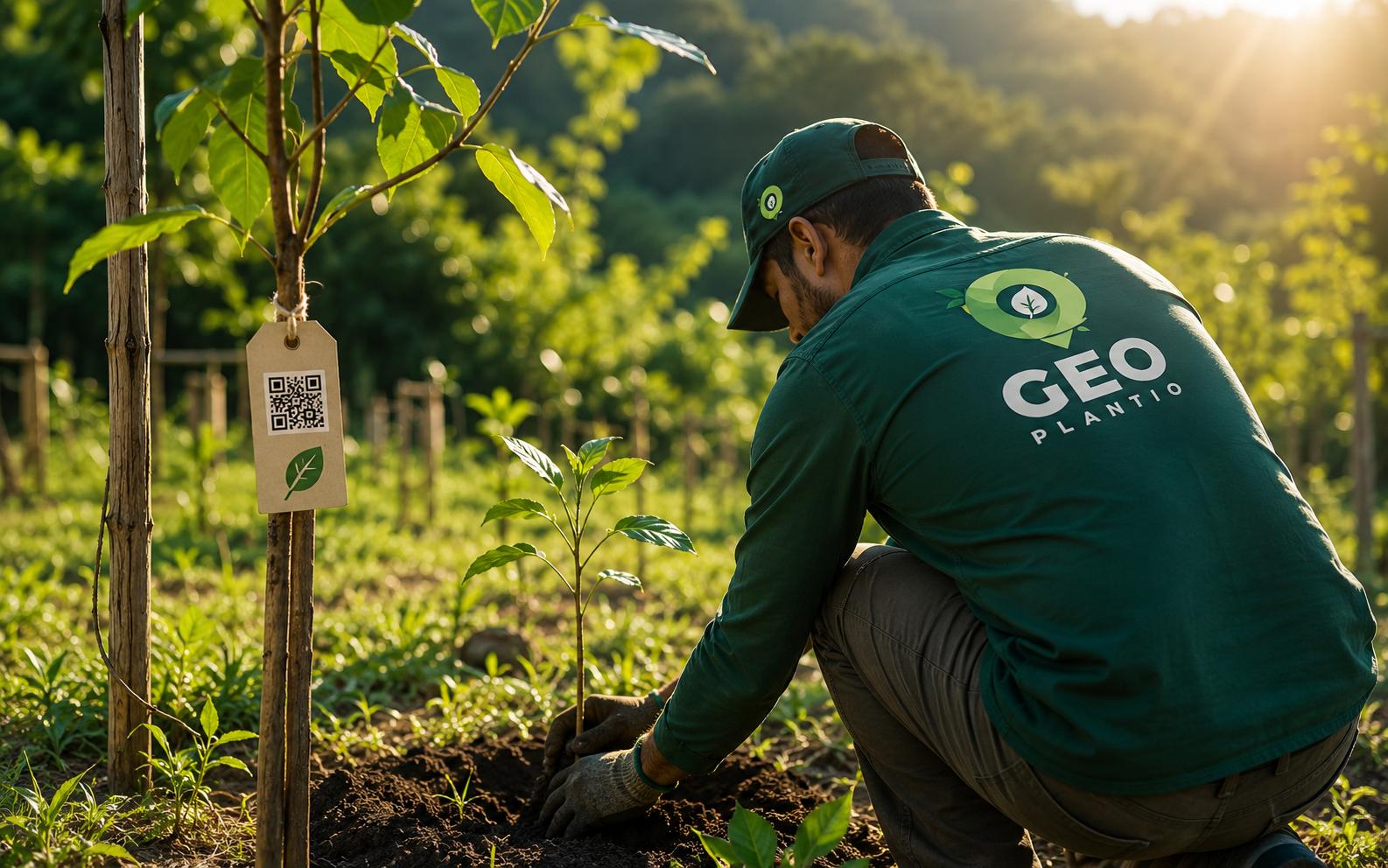
Choosing which trees to plant in a restoration project seems simple, until you realize that this single decision determines whether a forest survives the coming decades or disappears within a few years. At GeoPlantio, species selection is one of the most technical parts of our work — and that's what we'll cover here.
Every restoration project begins long before planting: it starts with a detailed diagnosis of the site, the soil, the land-use history, and whatever native vegetation remains nearby. Only after that does our forest engineering team define the list of species that will make up that specific planting.
1. Origin: always species native to the local biome
The first criterion is non-negotiable: we work exclusively with species native to the biome where the project is located, whether Atlantic Forest, Cerrado, or transition zones. Exotic species — even fast-growing ones that "seem" to solve the problem visually — don't recreate the ecological relationships a native forest provides: pollination, seed dispersal by local wildlife, nutrient cycling adapted to the region's soil.
2. Ecological succession: every species in its role
A forest isn't born ready-made. It goes through successional stages, and each species has a role within that dynamic:
- Pioneers: fast growth, tolerate full sun, and form the first canopy, protecting the soil and creating shade for the species that follow. Examples: embaúba, aroeira, capixingui.
- Early secondary species: develop under the partial protection of pioneers, with moderate growth.
- Late secondary and climax species: slower growth, tolerate shade when young, and form the definitive structure of the mature forest, like jequitibá-rosa and jacarandá.
A successful restoration planting combines these categories in calculated proportions — usually between 50% and 70% pioneers, with the rest split between secondary and climax species — to ensure the forest sustains itself over time, without relying on constant management.
3. Compatibility with soil and microclimate
We analyze parameters like soil moisture, drainage, sun exposure, altitude, and proximity to water bodies. Floodplain species, for example, don't perform the same way on well-drained slopes, and vice versa. Cross-referencing this data avoids the common mistake of applying a "generic list" of species to any terrain, regardless of its actual conditions.
4. Ecological function: attracting wildlife
We also select species that produce fruits, flowers, and seeds attractive to birds, bats, and other dispersers. This creates a virtuous cycle: the wildlife that comes to feed on the forming forest also helps bring in new seeds from neighboring areas, accelerating natural regeneration around the planted area — an effect that multiplies the project's impact far beyond what was physically planted.
5. Genetic diversity and seed origin
Whenever possible, we prioritize seeds collected in the project's own region or in regions with similar environmental conditions. This preserves local genetic diversity and increases the odds of seedlings adapting to the environment where they'll grow. It's one of the reasons we invest in community nurseries close to restoration sites, like the project we run in partnership with the Córrego do Macuco Quilombola Community.
"There's no universal species list. Every hectare has its own ideal combination, defined by soil, climate, land-use history, and the project's goal." — Marcos Lima Pereira, Forest Engineer, GeoPlantio
6. The project's purpose
Finally, the purpose of the planting directly influences selection. A Permanent Preservation Area (APP) restoration project has specific legal requirements regarding species density and composition. An Agroforestry System (SAF), on the other hand, combines native forest species with fruit and productive-interest species, to generate income for whoever manages the area. Urban forestry projects, in turn, prioritize species with size and root systems compatible with sidewalks and power lines.
Technology in service of the right choice
This whole process is supported by geoprocessing tools that cross-reference soil, terrain, and historical vegetation cover data, allowing simulations even before the first seedling goes into the ground. The result is a restoration project with far more predictable success — and less waste of seedlings, time, and resources.
Need a technical forest restoration project?
Our team prepares the diagnosis, species list, and planting plan tailored to your site.
Request a quote